









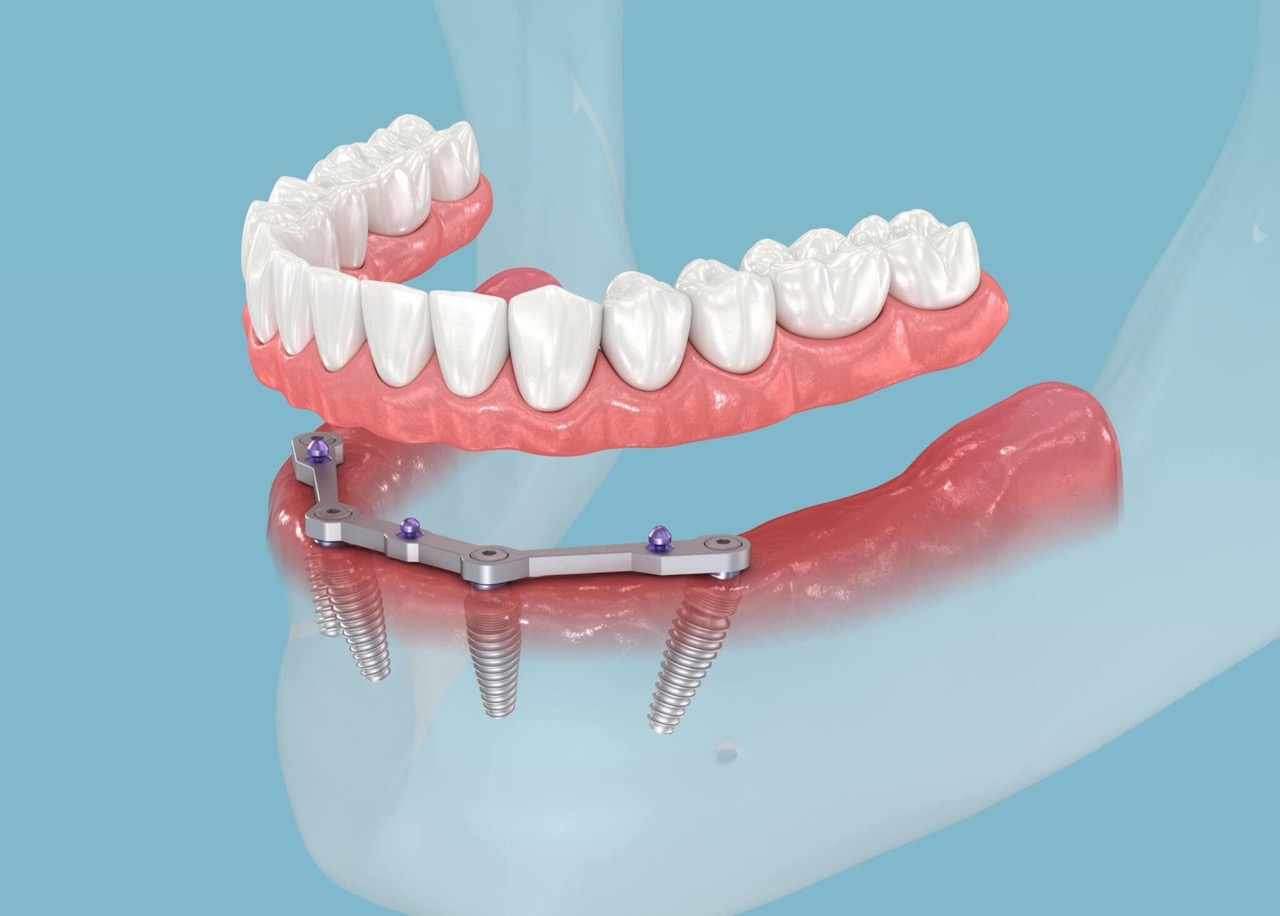


Because a crown is usually planned across more than one stage, the answer to “how long does a dental crown take?” depends on the condition of your tooth, the type of restoration chosen, the laboratory process and appointment availability. A traditional crown typically involves a preparation visit, wearing a temporary crown while the final restoration is crafted, and returning for a second visit to have it fitted. Some clinics may also offer a same-day dental crown workflow for selected cases, though this option is not suitable or available for every tooth. Knowing the usual dental crown procedure steps can help you understand what happens at each visit and how to plan around your schedule.
When planning ahead, it helps to ask your dentist about both the dental crown appointment length in the chair and the calendar time between appointments, as each affects your overall schedule differently. Note: Individual results may vary.
What happens before a dental crown is started?

Before any tooth preparation begins, your dentist will carefully assess the tooth and the surrounding gums. They may ask about pain, sensitivity, previous dental treatment, bite changes and how the tooth was damaged, while checking existing fillings, cracks, decay, gum health and the amount of healthy tooth structure that remains. A crown is planned around the long-term health and function of the tooth rather than appearance or timing alone.
Depending on what the examination shows, your dentist may discuss whether the tooth needs preliminary care before the crown is started. Reviewing the clinic’s clean and check-up service information provides helpful context on routine dental assessments, and you can also browse the Karanadowns Dental oral health resource hub for related patient-education guides.
Because every tooth is different, general online information cannot replace a clinical assessment of your own mouth. Your dentist’s advice should always guide your preparation, temporary-crown care and recovery.
StageWhat may happenWhy timing variesAssessmentExamination, discussion of symptoms and planning of the restoration.The tooth may need other care before crown preparation.Preparation visitNumbing, removal of damaged material, reshaping, scan or impression, and temporary crown placement.Tooth position, existing restorations and the complexity of preparation differ.Laboratory stageThe final crown is designed and made to the dentist’s prescription.Material, laboratory workflow and case requirements affect the interval.Fitting visitThe temporary crown is removed, the final crown is checked and it may be cemented if suitable.Fit, contacts, colour and bite may require careful review.
Visit 1: tooth preparation and temporary crown
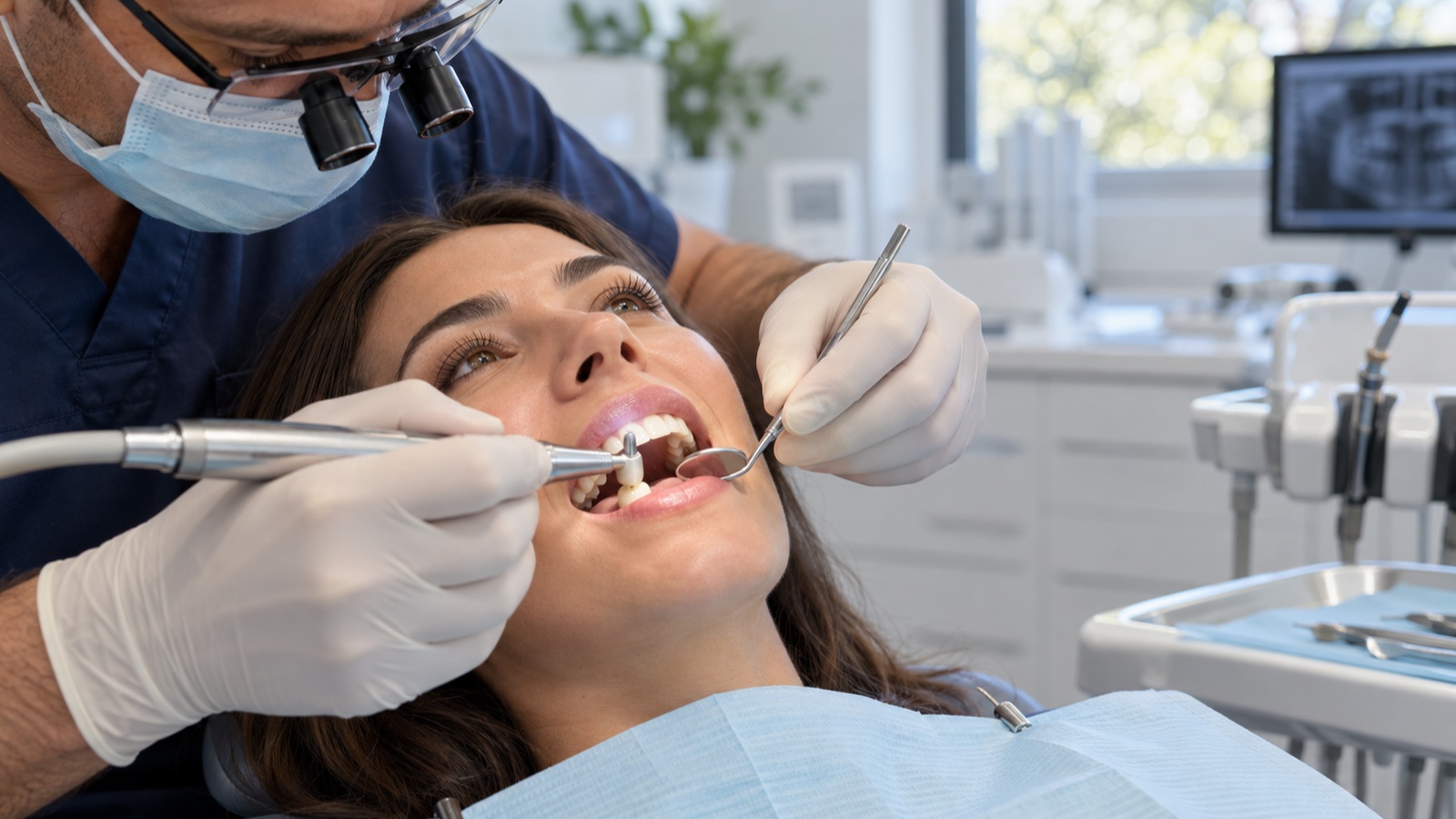
At the preparation appointment, the area is generally numbed before your dentist gently removes any decay, weakened tooth structure or old filling material. The remaining tooth is then shaped so the new crown can sit securely over it. Next, a digital scan or physical impression is taken to record the exact shape of the prepared tooth and how your upper and lower teeth meet.
If your final crown is being crafted in a laboratory, a temporary crown is usually fitted before you leave. It protects the prepared tooth and helps you eat and speak comfortably between appointments, though it is not as strong as the permanent restoration. Because a temporary crown can feel slightly unfamiliar at first, ask your dental team how to clean around it and which foods to avoid.
- Let the dental team know if the temporary crown feels loose, rough or high when you bite together.
- Brush gently along the gumline and clean between your teeth according to the instructions provided.
- Avoid sticky or very hard foods, and never use the temporary crown to tear open packaging.
You can read our dental crowns information alongside the personalised plan your dentist discusses with you. Because preparation requirements vary from tooth to tooth, your dentist is the best person to estimate how long your appointment will take.
Between appointments: the laboratory and final crown stage

Once your scan or impression is complete, the dental laboratory or in-house workflow begins crafting the final crown. Traditional laboratory-made crowns commonly involve a waiting period of around a week or two between the preparation and fitting visits, although there is no single schedule that applies to every case.
During this stage, your dentist and the dental technicians work from the planned shape, shade, contact points and bite records. Occasionally, the interval may be longer if the tooth needs further review, if the temporary crown requires attention, or if the finished restoration needs fine-tuning before placement. Before leaving your first appointment, it is worth confirming a few practical details:
- How long your temporary crown is expected to remain in place.
- What steps to take if sensitivity, discomfort or looseness develops between visits.
- Whether your next appointment is booked for the final fit or includes further clinical checks.
Visit 2: checking and fitting the permanent crown

At the permanent crown fitting visit, your dentist removes the temporary cover and examines the prepared tooth to check that it has settled comfortably. The final crown is then tried in to assess its fit along the gumline, contact with neighbouring teeth, shade and relationship with the opposing teeth. Your dentist will ask how the bite feels to you as well as checking your bite clinically.
If everything fits as planned, the crown may be bonded or cemented in place during the same visit. If the tooth or restoration needs further adjustment, your dentist will explain the next step rather than rushing placement. Mild unfamiliarity is common for a few days while you adjust to the new crown, but persistent pain, an uneven bite or any movement in the restoration should be assessed promptly.
Can a crown be completed in one day?
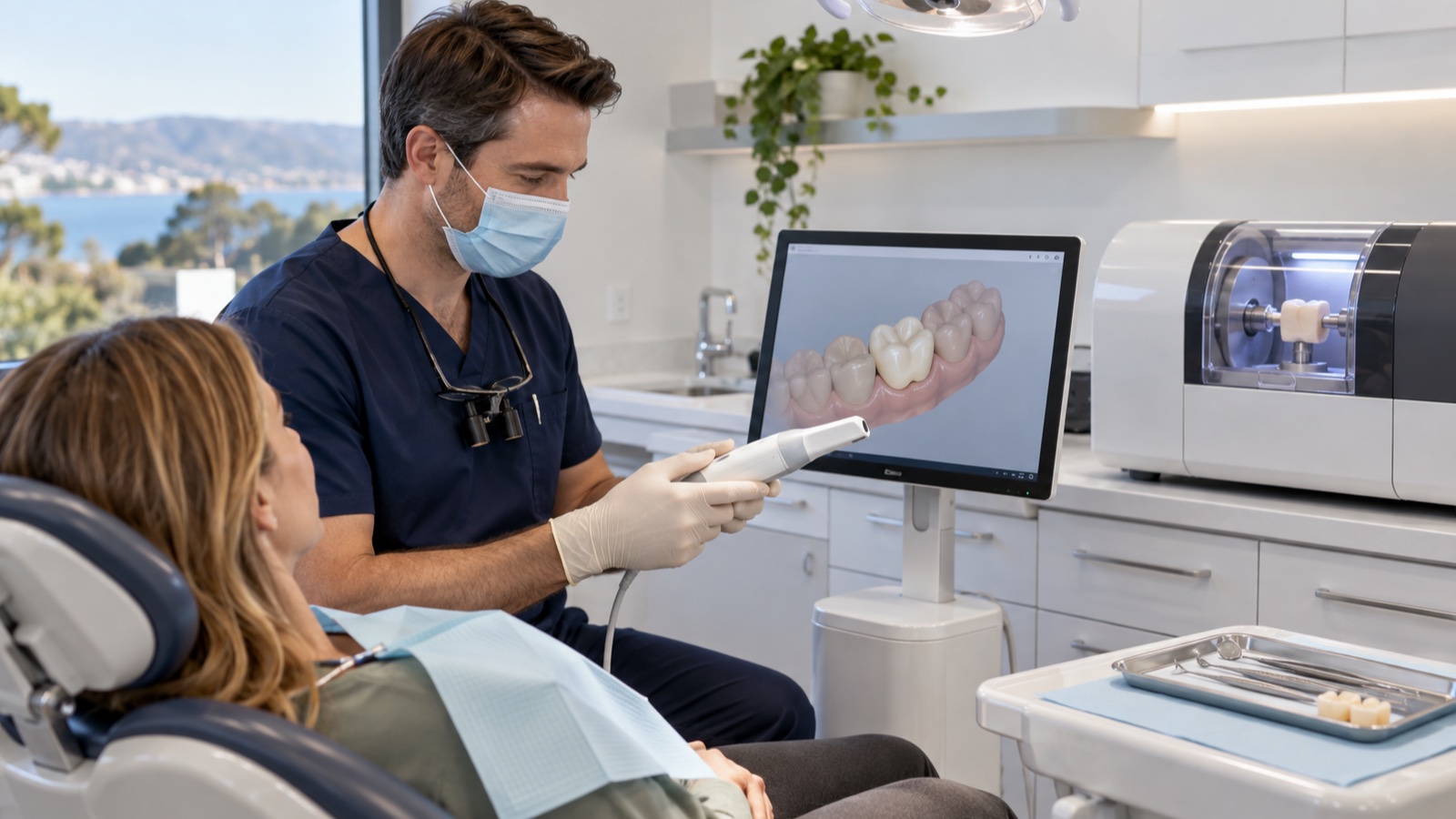
Some dental practices use digital scanning and chairside milling systems that can support a same-day crown workflow in selected cases. Where clinically suitable, this combines tooth preparation, digital design, manufacture and fitting within a single extended appointment. Whether a one-visit workflow is possible depends on the clinic’s equipment, the restorative material required, your bite and your dentist’s clinical assessment.
Even when same-day technology is available, not every tooth should be completed in a single visit. A tooth with active infection, extensive structural loss, gum inflammation or complex bite demands may benefit from staged treatment or a laboratory-made restoration. Ask your dentist whether a same-day option suits your tooth and what happens if additional preparation or review is needed.
What can make dental crown treatment take longer?

The treatment timeline can extend when a tooth has deep decay, a crack, a large existing restoration or symptoms that need closer investigation first. Gum inflammation, an uneven bite, difficulty keeping the area dry, or the need for a core build-up or root canal treatment can also add steps before the crown is finalised. Addressing these factors carefully helps support the restoration, although individual clinical outcomes always vary.
Appointment availability and laboratory turnaround times also influence the calendar schedule. If a crown is being planned after an accident or a broken tooth, ask whether the immediate priority is protecting the tooth and settling any symptoms before taking final impressions. Having a clear treatment sequence helps you see which stages are complete and what comes next.
Recovery and temporary-crown care questions

After both preparation and fitting, follow the care instructions given by your dental team. Brush and clean between your teeth as directed, and take note of any changes in sensitivity, bite comfort or your gums. Never attempt to glue a loose crown back in place yourself—contact the clinic for advice if a temporary or permanent crown feels mobile, sharp or uncomfortable.
Before heading home, it helps to check when you can eat normally, how to clean gently around the crown and which symptoms should prompt a review. Reading our dental veneer process guide can also help explain why custom dental restorations are often planned across several stages, though your dentist’s personal instructions always take priority.
Questions to take to your appointment
How many visits are expected for my tooth? How long is the preparation appointment likely to be? Will I have a temporary crown, and how should I care for it? What factors could change the laboratory or fitting timeline? Which symptoms should prompt me to contact the clinic?
When to seek professional care promptly

Contact a dentist promptly if a temporary or permanent crown becomes loose, chips, feels sharply uncomfortable or alters your bite. You should also arrange an assessment for persistent or worsening pain, gum swelling, fever, or sensitivity that does not settle as expected. Facial swelling, difficulty breathing or difficulty swallowing requires urgent medical attention.
This article provides general information only and does not replace personal medical or dental advice. If symptoms persist or worsen, contact your dentist or nearest medical service for assessment.
Frequently asked questions

How long does a dental crown appointment take?
The preparation visit usually takes longer than the fitting visit because it can involve numbing the area, shaping the tooth, taking digital scans or impressions and placing a temporary crown. The exact appointment length depends on the condition of the tooth and the planned workflow.
How long do you wait between crown appointments?
Traditional crowns generally involve a waiting period while a dental laboratory crafts the final restoration. That interval varies depending on the crown material, laboratory schedule, appointment availability and whether any extra clinical checks are needed.
Can I eat with a temporary crown?
Your dentist will give you specific advice for your tooth. In general, avoid very hard, chewy or sticky foods on that side and contact the clinic if the temporary crown feels loose or uncomfortable.
Is a same-day crown suitable for everyone?
No single workflow suits every tooth. Whether a same-day crown is an option depends on the tooth’s condition, the clinic’s equipment and your dentist’s assessment of the restoration required.
Conclusion: planning the crown timeline
When asking how long a dental crown takes, it helps to consider both the time spent in the chair and the full sequence from initial consultation, preparation and temporary protection through to laboratory work and final fitting. For advice tailored to your tooth, contact Karanadowns Dental to discuss an assessment.


