

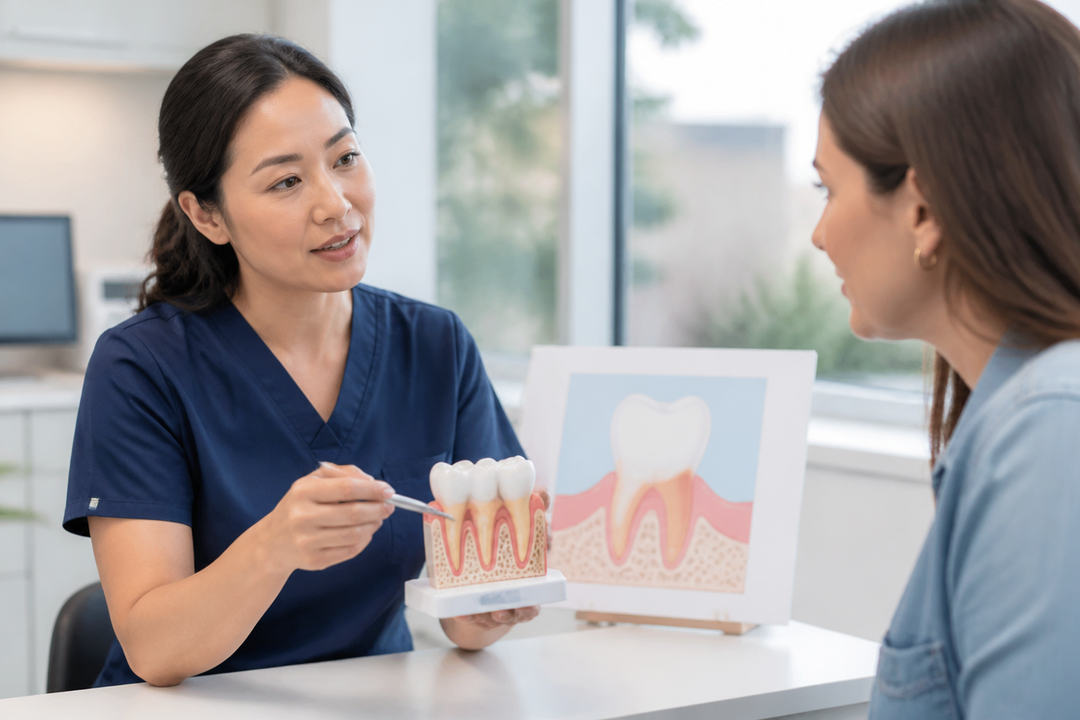




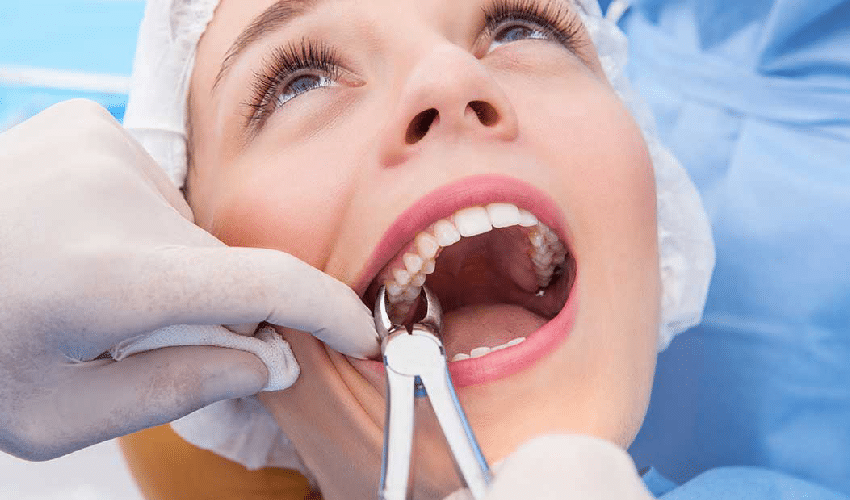





Being told that your wisdom teeth may need removal can raise a fair question: why do wisdom teeth have to be removed if they are a natural part of the mouth? The short answer is that they do not always have to be removed. A dentist usually considers removal when a wisdom tooth is difficult to clean, repeatedly inflamed, impacted, damaging a neighbouring tooth, or likely to create ongoing oral health problems. The reasons for wisdom tooth removal should be explained in plain language before you decide on treatment.
This guide explains the usual reasons a dentist may recommend assessment or removal, and when monitoring may be reasonable instead. It is general information for Australian patients and does not replace a personal dental examination or X-ray review. Note: Individual results may vary.
Why dentists sometimes recommend wisdom teeth removal
Wisdom teeth are the third molars at the very back of the mouth. They usually appear from the late teenage years into the twenties, although timing varies. Some come through normally and can be cleaned like other molars. Others only partly erupt, sit at an angle, or remain trapped under gum or bone.
The main issue is space and access. If a wisdom tooth cannot erupt into a stable, cleansable position, it can create a pocket where food and bacteria collect. A dentist may recommend wisdom teeth treatment after assessing the tooth position, gum condition, symptoms, cleaning access and any effect on the second molar beside it.
- Position: Is the tooth upright, tilted, partly erupted or impacted?
- Cleaning: Can a toothbrush and floss reach the area properly?
- Symptoms: Is there recurring pain, swelling, bad taste or gum irritation?
- Neighbouring teeth: Is the second molar being pushed, decayed or damaged?
- X-ray findings: Is there a cyst-like change, bone loss, or another concern?
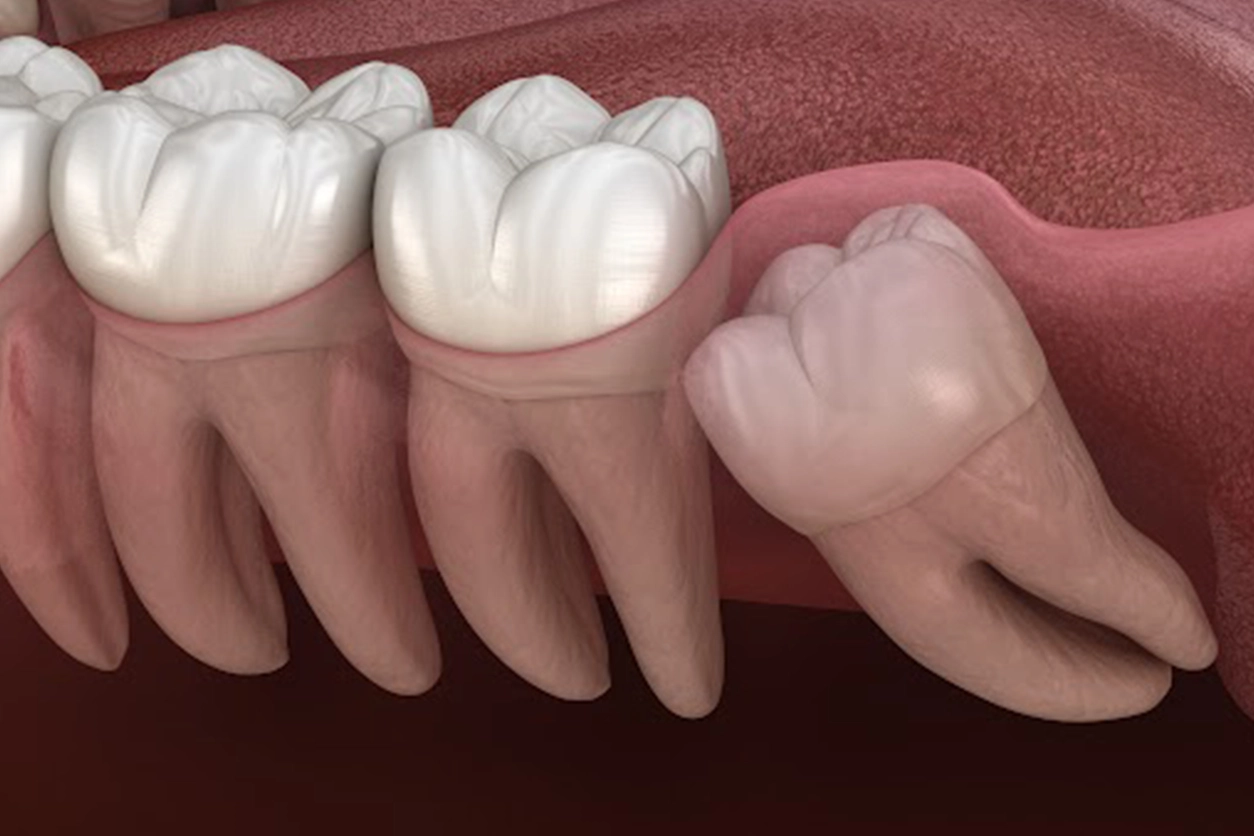
Common reasons wisdom teeth may need removal
One of the most common reasons is impaction. An impacted wisdom tooth is blocked from erupting normally, often because there is not enough room behind the second molar. It may lean forward, press into another tooth, or sit under a gum flap that is hard to clean.
Partly erupted wisdom teeth can also be prone to recurrent gum inflammation, sometimes called pericoronitis. Food and bacteria may collect under the gum flap, causing tenderness, swelling, a bad taste or difficulty chewing. If pain is already the main concern, the existing Karanadowns Dental guide to wisdom tooth pain relief explains short-term comfort measures while waiting for professional care.
- Repeated gum infection: recurring swelling or soreness around a partly erupted tooth.
- Decay risk: cavities in the wisdom tooth or the second molar because the area is hard to clean.
- Pressure or damage: contact against the second molar that may affect enamel, roots or supporting bone.
- Cyst or pathology risk: uncommon changes around an unerupted tooth, usually identified on imaging.
- Treatment planning: removal may be discussed before some orthodontic, restorative or denture planning decisions.
Australian public health resources such as Healthdirect also describe common reasons for removal, including impacted teeth, infection and damage to nearby teeth. Your own recommendation should still be based on your mouth, symptoms and imaging.

When wisdom teeth may not need removal
Not every wisdom tooth needs to come out. If a wisdom tooth is fully erupted, healthy, not causing symptoms, and can be cleaned properly, a dentist may suggest monitoring it during routine reviews. This is especially true when X-rays show enough space and no damage to the adjacent tooth.
Monitoring still matters because wisdom teeth sit far back in the mouth. Small changes in gum health, decay or cleaning access can be missed at home. A regular dental check-up gives your dentist a chance to compare symptoms, examine the gum around the tooth and decide whether new imaging is needed.
- A wisdom tooth that is straight, fully erupted and easy to brush may be left in place.
- A symptom-free tooth may still need monitoring if it is partly covered by gum.
- A tooth that looks harmless in the mirror may still be angled under the gum, which is why X-rays can be useful.
- Removal is generally a risk-benefit decision, not an automatic step for every patient.

Assessment table: monitor or discuss removal?
The decision is usually clearer when symptoms, cleaning access and X-ray findings are considered together. The table below is a general guide only. It cannot replace clinical judgement because tooth roots, nerve position, bone shape and medical history can all influence the recommendation.
If removal is discussed, the dentist should explain why it is being recommended, what the alternatives are, and what risks apply to your situation. Better Health Victoria notes that wisdom tooth problems can include pain, infection, cysts and damage to nearby teeth, but treatment planning should be individualised.
Warning signs that need prompt dental assessment
Wisdom tooth symptoms can start mildly, then become more disruptive if the gum or surrounding tissues become inflamed. A brief ache while a tooth erupts is different from swelling, fever, pus, difficulty opening the mouth or pain that is getting worse.
Use the checklist below to decide whether to arrange a dental assessment. If you have trouble breathing, trouble swallowing, rapidly spreading facial swelling, or feel severely unwell, seek urgent medical care rather than waiting for a routine dental appointment.
Bad breath after removal has different causes from bad taste before treatment. If you are already recovering from an extraction, the guide to bad breath after tooth removal may be more relevant.
What to expect if removal is recommended
If your dentist recommends removal, they will usually review your symptoms, medical history and X-rays first. The appointment may involve discussing local anaesthetic, sedation referral options where appropriate, expected healing time, and instructions for eating, rinsing and brushing afterwards.
The clinical process depends on the tooth position. Some wisdom teeth are removed similarly to other extractions, while impacted teeth may need a surgical approach. The Karanadowns Dental page on tooth extraction explains the broader extraction service, and the aftercare guide on how to brush after wisdom teeth removal covers early cleaning steps after treatment.
- Ask why removal is recommended in your specific case.
- Ask what could happen if the tooth is monitored instead.
- Ask about likely healing steps, time away from work or study, and follow-up needs.
- Tell your dentist about medications, medical conditions, pregnancy, allergies or past surgical concerns.
The Oral Health Foundation explains that wisdom teeth may not need removal if they are healthy and not causing problems. This supports the key point: the decision should be based on an assessment, not on age alone.

Frequently asked questions
Do all wisdom teeth have to be removed?
No. Some wisdom teeth can stay in place if they are healthy, fully erupted, easy to clean and not affecting nearby teeth. A dentist may still monitor them over time because their position at the back of the mouth can make changes harder to notice.
What age are wisdom teeth usually assessed?
Wisdom teeth are commonly assessed in the late teenage years or early adulthood, but there is no single age that applies to everyone. X-rays may be recommended when symptoms appear or when the dentist needs to understand the position of developing third molars.
Can I wait if my wisdom tooth is not painful?
Sometimes monitoring is reasonable, especially if the tooth is cleanable and X-rays show no obvious concerns. Waiting is less suitable if the tooth is damaging the second molar, repeatedly inflamed, decayed, or associated with swelling or infection signs.
Can wisdom teeth cause crowding?
Wisdom teeth are sometimes blamed for crowding, but tooth movement can have several causes. A dentist or orthodontic provider may consider wisdom teeth as part of the overall picture rather than assuming they are the only cause.
What happens if problematic wisdom teeth are left alone?
Potential problems include repeated gum inflammation, decay in the wisdom tooth or second molar, pain, infection, cyst-like changes, or more complex treatment later. The likelihood varies, so an examination and imaging review are important.
Conclusion: deciding your next step
Wisdom teeth are removed when the likely benefit outweighs the risk of leaving them in place. For one person, that may mean removing an impacted tooth that keeps flaring up. For another, it may mean monitoring a healthy wisdom tooth during regular check-ups.
This article is general information only and does not replace personal medical advice. If symptoms persist or worsen, contact a dentist or your nearest medical service for assessment. If you are unsure whether your wisdom teeth should be monitored or assessed for removal, contact Karanadowns Dental now for guidance on your next appointment.


